What to Do If an Employee Laptop Brings Malware Into the Office Network
A plain-language incident walkthrough for small offices when an employee laptop brings malware onto the office network: containment order before diagnosis, network isolation decisions, checking other machines for signs of spread, and turning the cleanup into repeatable rules. Written from Grant Dorsey's first-person operations experience with small U.S. businesses.

I've walked into this scene more often than I'd like: a Monday morning, an employee laptop that spent the weekend on a client site or a hotel network, and a docking station that just became a bridge for something nobody invited in. The alerts usually arrive quietly — a blocked download, a strange process, a scan that keeps restarting. That is the moment a practical office malware response checklist stops being paperwork and decides whether this becomes one cleanup or a company-wide mess.
Most small offices don't need heroic measures to handle this. They need a sequence they can follow without arguing about it mid-crisis, because every minute spent debating costs time while the malware keeps working. Everything below comes from incidents I helped clean up over a decade of managing operations and endpoints for small businesses around Madison — what worked, what made it worse, and what I wish someone had told the person holding the laptop.
Contain the Laptop Before You Diagnose It
Containment is not a technical step. It's a decision about order. Before you scan, before you call your vendor, before you theorize about how the infection started, you separate the laptop from everything it normally touches. The natural instinct is to dig into the laptop first because that is where the evidence sits. Resist it. The laptop is already the problem; the rest of the office is still a question mark.
Here is the containment order I use, and it has held up in every office where I've run it:
Ask the employee to stop. No new logins, no file opens, no cloud sync, no password changes. Your goal is to halt new activity, not to preserve productivity.
Unplug the laptop from the dock and the ethernet cable, then disconnect Wi-Fi from the network menu. Leave the machine running for now — a full shutdown can hide evidence you'll want later.
Move the laptop somewhere it can't quietly rejoin the office network: a separate room, a desk away from the router, or airplane mode with the lid closed.
Photograph or screenshot every alert you can see. A phone photo of the screen is valid evidence and takes ten seconds.
Ask the employee to write down what they did in the last two days — networks used, files opened, USB drives plugged in, links clicked.
Only then bring in your admin tools or your IT contact for a deeper look.
Steps 4 and 5 feel like they slow you down, and that's the point. Ten minutes of documentation in the first hour saves you three hours of guessing on day three.
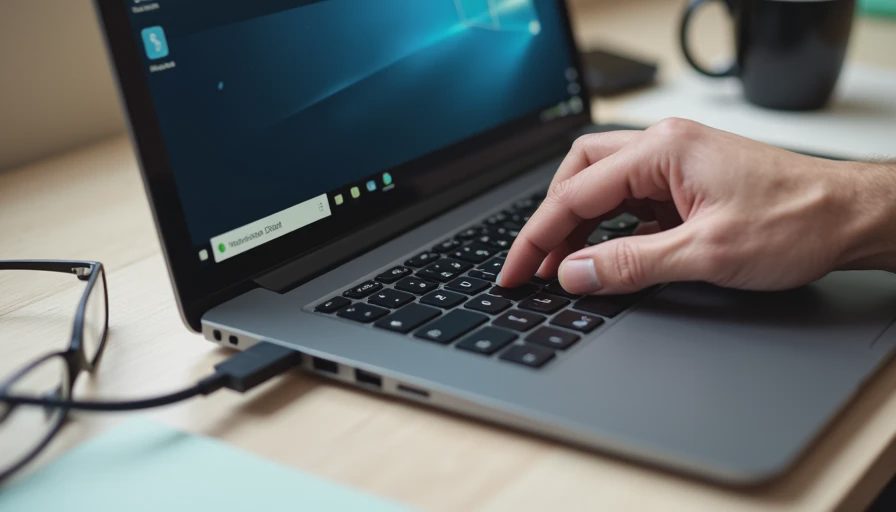
Isolate the Network and Decide What Stays Connected
Once the laptop is off the network, the question becomes what the malware already touched. Most infections that ride in on a road laptop don't spread on their own — they get help from shared folders, saved passwords, and logins that happen before anyone thinks to stop them. Network isolation is the step of the office malware response checklist where small teams lose the most time, because it feels like doing nothing. It isn't. Cutting the paths malware uses is active work.
The Office Network Security Basics That Apply Right Now
For most small offices, the office network security basics that matter during an incident are three: whether your Wi-Fi uses one shared password, which computers share folders, and who holds local admin rights. You don't need a server room for any of this to be useful.
If the laptop joined the office Wi-Fi with the same password every other device uses, that password is now suspect.
If the office runs a mapped shared drive everyone mounts at login, that drive is the first place malware looks for victims.
If your router or antivirus console offers device quarantine, use it now rather than later.
Here is the spread-risk picture I run through with clients, because it tells you where to look first:
What's exposed | How malware usually reaches it | Your first move |
|---|---|---|
Shared drives and the office file server | An infected file opened from the mapped drive | Note who accessed the drive recently; don't delete anything yet |
Accounting and payroll workstations | They run older software and hold full database access | Keep them offline until the laptop investigation finishes |
Email and cloud file accounts | Saved passwords let malware log in remotely | Reset passwords from a trusted device; review recent sign-ins |
Copiers, printers, and smart devices | Rarely infected, but they log traffic you can review | Leave them alone unless a scan flags one |
Work the table from the top. In my experience, most small-office infections never leave the first row — but the ones that do always seem to head for accounting.

Check the Rest of the Fleet While You Still Have Evidence
Checking other machines is the part of an office malware response checklist that most teams rush or skip, usually because the first scan came back clean and everyone wants to move on. A clean scan on one machine tells you little. What tells you more is whether other machines show the same symptoms the laptop showed before you caught it:
An antivirus alert on another computer that arrived in the same time window.
A machine that's been slow in ways users describe as "acting weird," or running scans on its own.
Shared folders with files modified in the last two days when nobody remembers editing them.
Password reset emails or two-factor prompts nobody requested.
None of these is proof of infection. Together, they decide whether you expand the response or declare it over.
Who Should Run the Checks
On a small team, one person should own the checks — usually the office manager or whoever holds the admin passwords. The employee whose laptop started this should not be scanning other people's machines while their own investigation is unfinished. It isn't about trust; it's about keeping roles clean. Half the messy cleanups in my Avoidable Problems notebook began because the same person was both the source and the investigator.
Turn the Incident Into a Rule
When the network is confirmed clean, the work isn't over — it's at the more valuable stage. A laptop that brings malware into the office almost always did something your office had no rule about, or had a rule nobody could quote from memory.
Three rules cover most of what I've seen. First, a returning road laptop gets scanned and updated before it docks. Second, devices you don't manage — guest phones, personal laptops, visiting contractors — go on a separate guest network. Third, decide in writing who gets told first when an alert appears, and who makes the call to disconnect. None of these is complicated. Each one removes a decision that people make badly under pressure.
Security gets easier when the rules make sense, and that's the honest summary of most of the incidents I've cleaned up. If your office hasn't planned for this yet, you're in the same place most small teams are. The laptop isn't the enemy — the missing sequence is. Agree on the order now, while no one's screen is flashing, and the next road laptop that comes home with an unwanted passenger gets handled in an afternoon instead of a week.
Ransomware Panic Checklist: What Small Teams Should Do Before They Start Guessing
A ransomware response for small teams that starts before anyone touches ...
The Most Preventable Security Incident I Ever Watched Unfold in an Office
This article tells the slow, true story of a six-day office phishing inc...
First 60 Minutes After a Suspected Office Malware Infection
What a small office does in the first hour after a suspected malware inf...
Leave a comment
No comments yet.