Emergency Patches Have No Waiting Period — Lessons from PHP2Shell and Node2Shell
PHP2Shell patches were followed by active scanning within roughly 20 minutes. The same day brought Node2Shell, a parallel 9.2-rated flaw in Node.js’s Brotli decoder. This article opens with a familiar office scenario, then explains why emergency runtime patches have no observation period and the short list of habits every small office should adopt.
I have watched a 15-person professional-services firm run its public website and client portal on shared hosting for years. The office manager assumed “updates” were the host’s responsibility. The developers who built the site had moved on. When a critical runtime flaw landed, no one in the building could answer a simple question: what exact version of the language was actually running?
That quiet assumption is now expensive. When a critical runtime patch drops, treat it as an immediate operational task, not a “when we have time” item. PHP2Shell fixes shipped at approximately 14:00 UTC on October 21, 2026. Researchers reported active scanning and exploitation attempts roughly 19–20 minutes later. The same day, Node.js released patches for a similarly severe Brotli decoder flaw now called Node2Shell. In both cases the vulnerability lives below the application layer, and the window between public fix and active probing is measured in minutes, not days.
The 19-Minute Reality Check
PHP2Shell (CVE-2026-109618 and CVE-2026-109619) allowed unauthenticated remote code execution in the PHP runtime itself. The emergency releases for supported branches arrived on October 21. Within about twenty minutes, honeypots and researchers began seeing probing traffic. Some firms had already observed earlier reconnaissance, but the post-patch surge confirmed what experienced operators already knew: once the fix is public, the exploit development and scanning machinery accelerates immediately.
This is not unique to PHP. It is simply the current speed of the ecosystem. “We’ll wait to see if it is really being exploited” is no longer a rational posture for a 9.2-rated runtime flaw. By the time the answer is obviously yes, the opportunistic scanners have already made several passes across the internet.
Node2Shell: Same Script, Different Language
On the same day, Node.js shipped fixes for CVE-2026-111497 — an out-of-bounds write in the bundled Brotli decoder. The issue received a CVSS v4.0 score of 9.2 and was nicknamed Node2Shell (also referred to as Brotli2Shell or HTTP2Shell in some reporting). Affected Node.js release lines were 22.x, 24.x, and 26.x. Fixed versions are 22.23.4, 24.22.1, and 26.12.1. Unsupported branches receive no official fix.
The vulnerability sits in a low-level compression library that many applications use when handling Brotli-compressed request bodies or responses (including via fetch() or certain Express middleware). Clean application code does not protect you if the runtime or a bundled library is vulnerable. Researchers demonstrated remote code execution against official Node.js images, and later reporting confirmed exploit traffic in the wild.
The parallel is deliberate and useful:
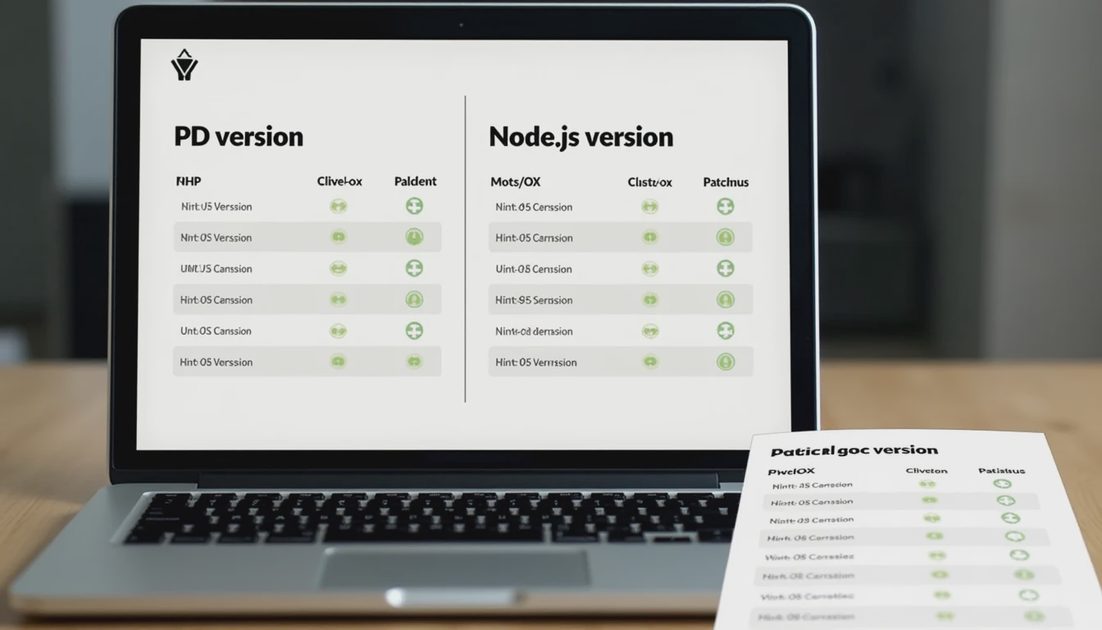
Aspect | PHP2Shell | Node2Shell |
|---|---|---|
Root cause | Memory-safety flaws in PHP runtime | Out-of-bounds write in Brotli decoder |
CVSS | 9.2 | 9.2 |
Authentication required | None | None (where Brotli data is processed) |
Application code defense | Ineffective | Ineffective |
Patch day | October 21, 2026 | October 21, 2026 |
Post-patch activity | Scanning within ~20 minutes | Proof-of-concept code and later in-the-wild traffic |
Offices that say “we don’t run PHP, we run Node” are still exposed to the identical operational failure mode: incomplete inventory, slow version visibility, and a patch process that treats emergency runtime updates as optional.
The Habit That Actually Reduces Risk
Most small and mid-sized offices do not need a full-time security team. They need a short, repeatable set of habits that treat runtime software the same way they already treat endpoint protection or Microsoft 365 updates.
1. Maintain a living inventory
List every public-facing or internet-reachable system and the major runtime underneath it (PHP, Node.js, Python, .NET, etc.). Include staging servers and “temporary” marketing sites. Forgotten environments are frequent entry points. (This is the same discipline covered in our basic device and access checklist.)
2. Require version visibility
Ask hosts, developers, and agencies to report the exact runtime versions on a quarterly basis—or immediately when an emergency advisory appears. “We keep things updated” is not actionable information.
3. Define a short patch window for critical runtime issues
For CVSS 9+ flaws in the language runtime or a core library, the target should be same-day or next-business-day, not “after the next sprint.” Restart workers or redeploy containers after the update so the fix is actually loaded.
4. Document the change
Record the previous version, the new version, the date, and who performed the work. That single log entry becomes useful for insurance questionnaires, client audits, or internal reviews. (See how small teams should document security decisions so they hold up later.)
5. Assume the application layer is never enough
Security plugins, WAFs, and clean application code are valuable. They cannot fix bugs that execute before application code runs or inside a shared library the application trusts. Tool selection still matters — choosing trustworthy antivirus and endpoint protection remains essential — but it is not a substitute for keeping the runtime itself current.

What This Looks Like in Practice
An operations manager or office lead does not need to become a vulnerability researcher. The practical questions are straightforward:
Do we know every place we run PHP or Node.js (or any other runtime that processes untrusted input)?
Can we obtain the exact version string within one business day?
Is there a named person responsible for applying emergency runtime patches?
Do we restart services or rebuild images after the update?
Do we write down what we did?
These questions are deliberately boring. That is the point. A safer office is usually a more boring office. The 19-minute window after the PHP2Shell patch and the parallel Node2Shell disclosure simply remove any remaining excuse for treating critical runtime updates as low priority.
If your team still operates with a multi-week lag on language-runtime patches, the last week of October 2026 is the forcing function. Inventory the systems. Confirm the versions. Apply the fixes. Restart the processes. Document the work.
If you want a repeatable office security checklist that covers runtime inventory, patch windows, and offboarding handoffs, our free Office Security Checklist is a practical starting point.
Signature: Security gets easier when the rules make sense.
— Grant Dorsey
On Call Management for Safer, Calmer Small-Business IT
NextSingle Factor Authentication: Why Small Offices Should Move Beyond It
Digital Footprint Audit: A Practical Guide for Small Businesses
A digital footprint audit helps small businesses find exposed accounts, ...
Phishing Scam Text Message: How Office Teams Can Respond Safely
A phishing scam text message can look harmless. Learn how office teams s...
The Best Security Habits for Hybrid Teams Who Work at Home, in Coffee Shops, and in the Office
A practical guide to realistic security habits for hybrid teams across t...
The Office Wi-Fi Rules Most Teams Never Write Down — and Later Regret
Most small-office Wi-Fi problems come from decisions nobody remembers ma...
Leave a comment
No comments yet.